

Executive Summary: The “Safe Haven” Boom
Part 1: The Numbers Don't Lie (2023-2026 Trends)
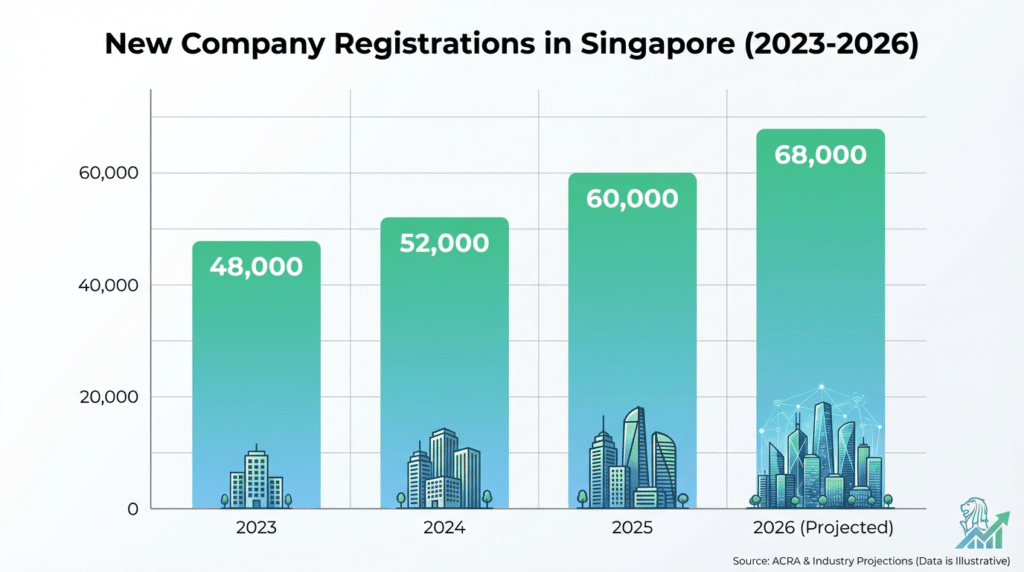
The “Year-End Surge” Explained
Why the sudden jump?
| Year | Est. New Companies Registered | Primary Driver |
|---|---|---|
| 2023 | ~48,000 | Post-Covid Recovery |
| 2024 | ~52,000 | Global Geopolitical Stability |
| 2025 | ~60,000 | AI Boom & "China+1" Strategy |
| 2026 (Proj) | ~68,000 | The "Safe Haven" Effect |
Part 2: Singapore vs. The World (2026 Comparison)
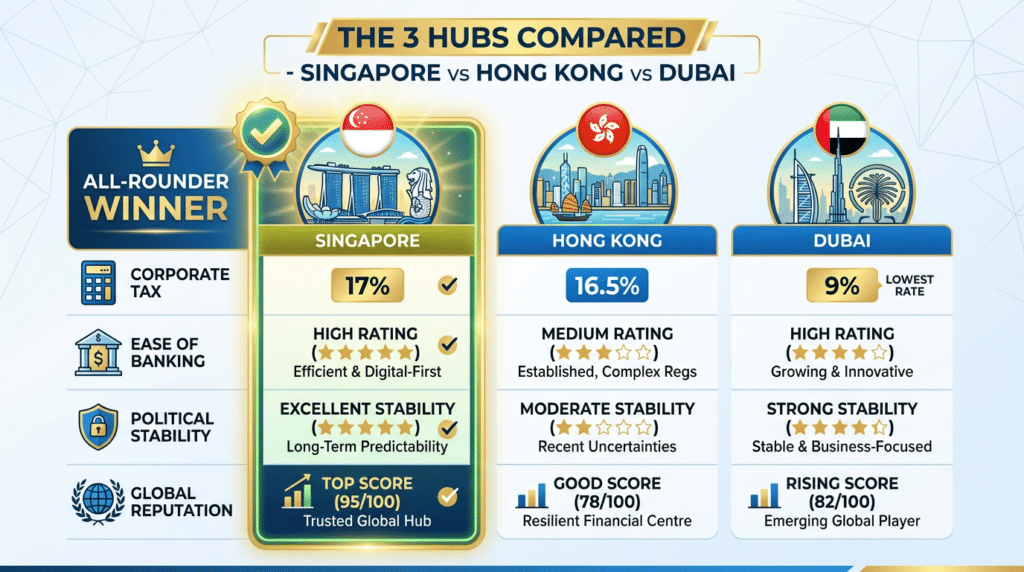
In 2026, the global business landscape has three main contenders for your Headquarters: Singapore, Hong Kong, and Dubai. How do they stack up?
1. Singapore: The “All-Rounder”
- Pros: Unmatched political stability, strong legal system, and a gateway to Southeast Asia (ASEAN).
- Cons: Higher operating costs (rent, salaries).
- Verdict: The best choice for long-term asset protection and regional expansion.
2. Hong Kong: The “Gateway to China”
- Pros: Zero tax on offshore income (territorial tax system), proximity to Shenzhen manufacturing.
- Cons: Perceived political risk for Western companies.
- Verdict: Still powerful for China-centric trade, but losing ground to Singapore for global HQs.
3. Dubai: The “Tax-Free” Challenger
- Pros: 0% Personal Income Tax, 9% Corporate Tax (introduced recently).
- Cons: Banking can be slower; less integrated with Asian supply chains.
- Verdict: Excellent for crypto and individual wealth, but less proven for corporate structuring than Singapore.
Winner: For stability and global reputation, Singapore remains the gold standard.
Part 3: The Banking Reality Check (2026 Edition)
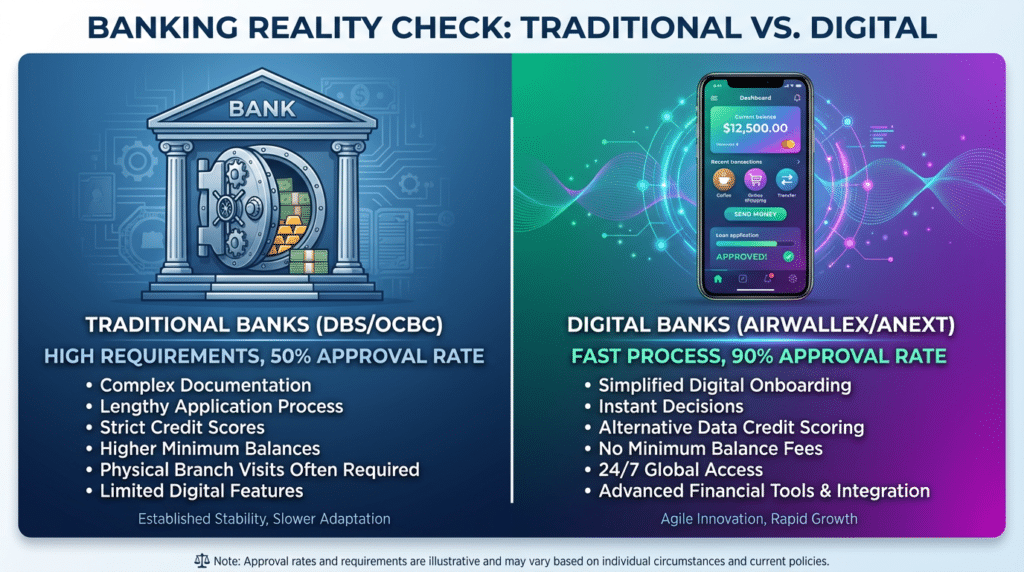
Traditional Banks (DBS, OCBC, UOB)
Digital Banks (Airwallex, ANEXT, Aspire)
Part 4: The "Tax Loophole" Myth-Busting
Let’s clear up a dangerous misconception about Singapore company incorporation.
Myth: “I can incorporate in Singapore and pay 0% tax on everything.”
Fact: Singapore has a territorial tax system, but it is not a tax haven.
The Foreign Sourced Income Exemption (FSIE)
The “Economic Substance” Rule:
To enjoy tax benefits, you cannot just be a “paper company.” You need Economic Substance. This means:
Part 5: Which Setup is Right for You? (3 Personas)
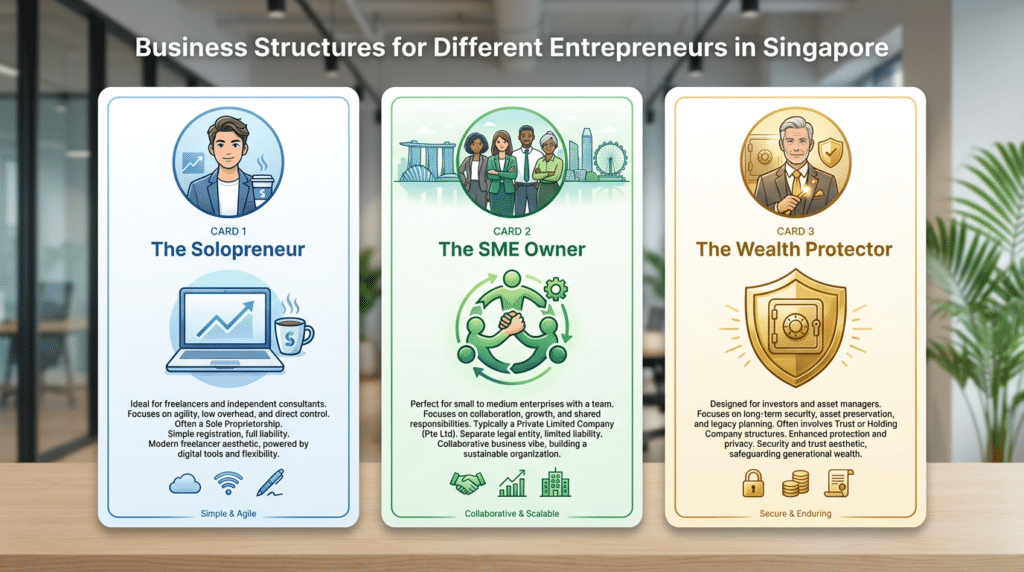
1. The Digital Nomad / Solopreneur
2. The Regional HQ (SME)
3. The Wealth Protector (Family Office)
Conclusion: The Window is Open
Ready to start?
Don’t just be a statistic. Build a compliant, bankable business with Terra Advisory Services.
Frequently Asked Questions (2026 Update)
1. How many new companies registered in Singapore in 2025?
In December 2025 alone, 6,233 new businesses were registered, a 43.5% increase from the previous year. We estimate the total for 2025 exceeded 60,000 new incorporations.
2. Why are so many foreigners incorporating in Singapore in 2026?
The primary driver is the “Safe Haven Effect.” Investors are seeking stability amidst global geopolitical uncertainty and are using Singapore as a neutral base for asset protection and regional expansion.
3. Can I open a Singapore corporate bank account without visiting?
Yes, especially with digital banks like Airwallex, ANEXT, and Aspire, which offer fully digital onboarding with approval rates over 90%. Traditional banks may still require a physical presence or video interview.
4. Is Singapore a tax haven?
No, Singapore is not a tax haven. It has a territorial tax system where foreign-sourced income can be tax-exempt, but only if specific “Economic Substance” requirements (like having a local director and holding board meetings in Singapore) are met.
5. What is the minimum capital required to start a company in Singapore?
The minimum paid-up capital is just S$1. However, we recommend starting with at least S$1,000 to S$10,000 if you plan to open a traditional bank account or apply for an Employment Pass.
6. Do I need a local director to incorporate in Singapore?
Yes, every Singapore Private Limited Company must have at least one director who is “ordinarily resident” in Singapore. If you are a foreigner, you can engage a Nominee Director service to fulfill this requirement.
7. How long does it take to incorporate a company in Singapore in 2026?
The process is incredibly fast. Once all documents are signed and KYC is cleared, the actual incorporation with ACRA can be completed in less than 1 hour. The entire process, including preparation, typically takes 1-3 days.
8. Can I move my family to Singapore if I start a company?
Yes, if you apply for an Employment Pass (EP) and earn a fixed monthly salary of at least S$6,000, you can bring your spouse and children on Dependant’s Passes (DP). Note that the salary criteria may be higher for older, more experienced candidates.
9. What are the annual compliance requirements for a Singapore company?
You must hold an Annual General Meeting (AGM), file Annual Returns (AR) with ACRA, and file Corporate Tax Returns (Form C-S/C) with IRAS. You also need to appoint a Corporate Secretary within 6 months of incorporation.
10. Is it better to incorporate in Singapore or Hong Kong in 2026?
Singapore is generally preferred for global HQs due to its political neutrality and stability. Hong Kong remains a strong choice for businesses specifically targeting the Mainland China market, but Singapore offers broader access to the ASEAN region and global markets.
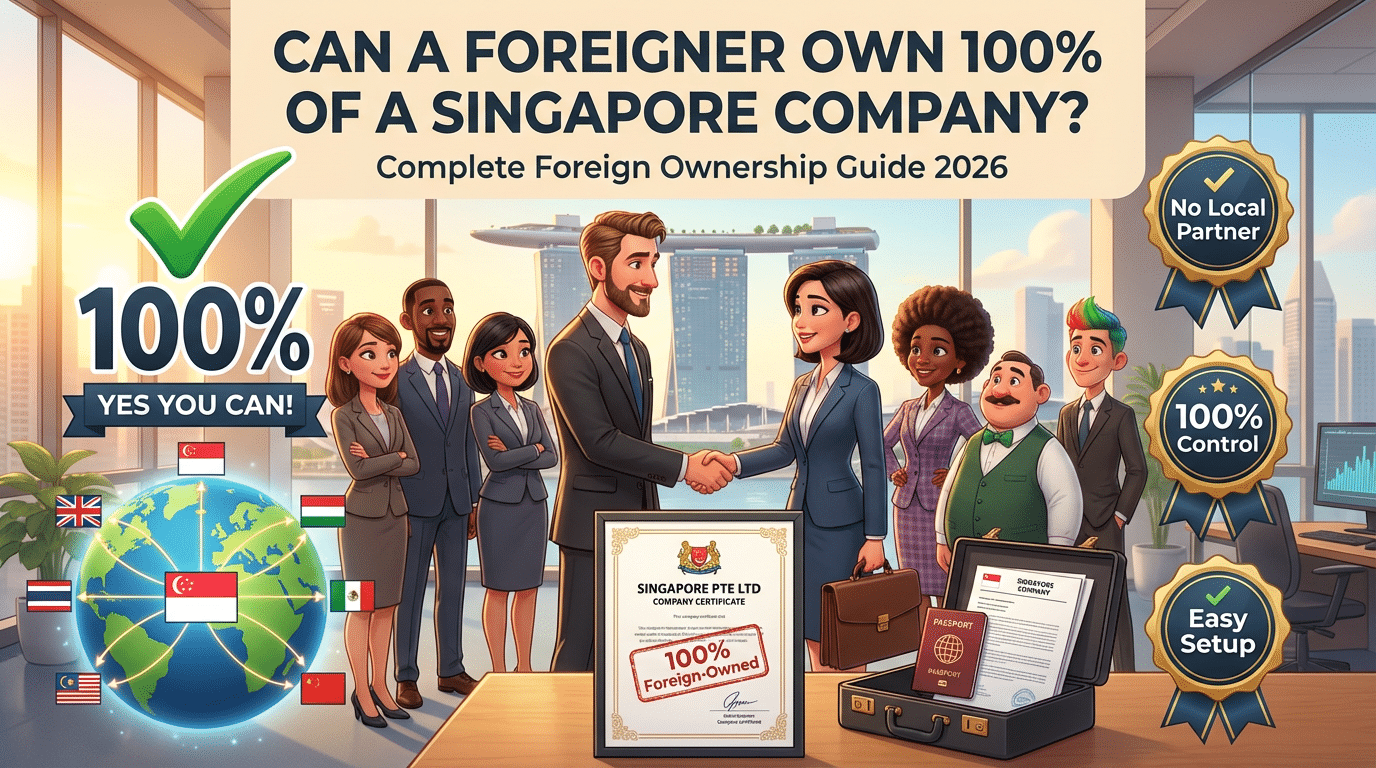
11. Can a foreigner own 100% of a Singapore company?
Yes, Singapore allows 100% foreign ownership. You do not need a local partner or shareholder, and you have full control over your business. For more details on the requirements for foreign owners, please refer to our Guide on Can a Foreigners own 100% of a Singapore Company
Disclaimer: This report is for general informational purposes only and does not constitute professional financial, tax, or legal advice. While we strive for accuracy based on the latest market data and government policies, regulations are subject to change. Please consult with a qualified corporate secretary or tax advisor before making any business decisions.